Whether to repair or replace a pump depends on a handful of factors: the type of pump, its age and condition, what actually failed, whether parts are still available, how efficient it is, how often it has failed before, whether it is still the right size, and what downtime costs you. A worn seal or bearing in a rebuildable pump is usually worth repairing. A cracked casing, a sealed unit with a burned-out motor, or a pump that keeps failing because it is the wrong size usually is not.
This guide walks through each factor the way a technician weighs it on site, so property managers, supers, owners and homeowners can have a better conversation with their contractor, and with the board when one is involved, and avoid the two most common mistakes: replacing equipment that only needed a part, and repairing a pump that is going to fail again next season.
Start with an accurate diagnosis
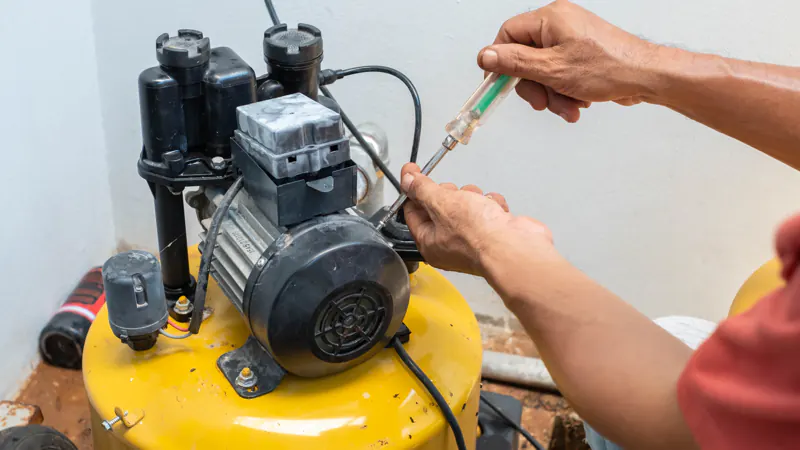
You cannot make a good repair-or-replace decision until you know what failed and why. Many "pump failures" turn out to be something else: a bad pressure switch, a stuck float, a failed contactor, a tripped overload or a drive fault. A thorough assessment should include:
- Voltage and amperage readings compared with the motor nameplate.
- Suction and discharge pressures compared with the pump's performance curve.
- A check of noise, vibration and bearing temperature.
- Inspection of seals, couplings and, on base-mounted pumps, shaft alignment.
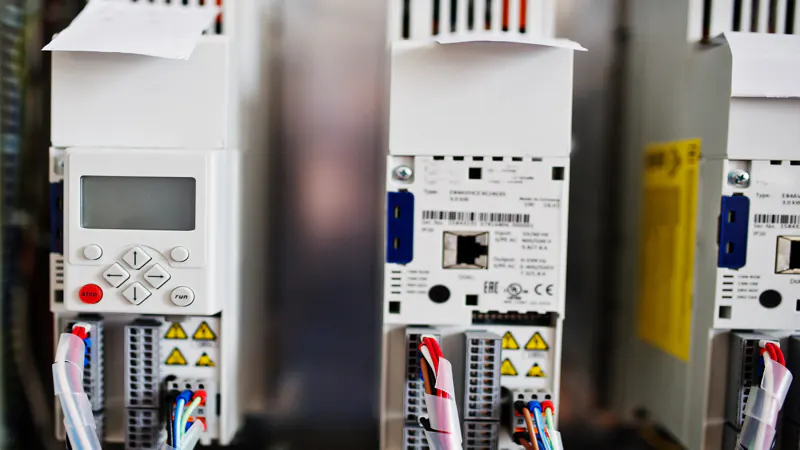
- Testing of the controls: pressure switches, transducers, floats, starters and drives.
That is what we mean by "inspect, discover and fix." If the real problem is in the panel, our pump control services may solve it without touching the pump at all.
The decision factors
1. Is the pump built to be rebuilt?
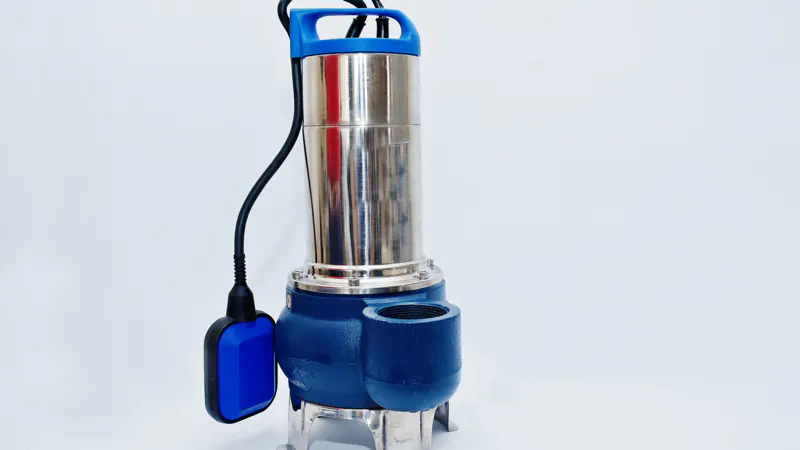
Many small pumps, including most residential sump pumps, small sewage ejector pumps and wet-rotor heating circulators, are designed as replaceable units. Repair options are limited, and replacement is often the practical answer. Larger equipment is different. Base-mounted end-suction pumps, split-case pumps, vertical multistage booster pumps and heavy-duty submersible sewage pumps are built so that seals, bearings, impellers, wear rings and motors can be replaced. A well-maintained casing can outlast several sets of wear parts.
2. Age and overall condition
Look at the whole pump, not just the failed part. Heavy corrosion on the casing, an eroded impeller or volute, a pitted shaft, or a rusted base and piping all suggest that fixing one part will only expose the next weak point. A pump early in its life with one worn component is a good repair candidate. A pump late in its life with several worn components usually is not.
3. What failed
Wear parts such as mechanical seals, bearings, couplers, capacitors, float switches and contactors are normal maintenance items and usually point toward repair. A cracked casing, badly eroded internals, or a seized and corroded rotating assembly usually point toward replacement. Motors are their own decision: small motors are typically replaced, while larger motors may be worth repairing or rewinding, or replacing with a premium-efficiency model. Our pump motor services cover both paths.
4. Parts availability and lead time
If the model is discontinued, parts may be scarce or slow to arrive, and a repair that waits weeks for a part may cost more in downtime than a replacement that is available now. Also check whether a new pump fits the existing piping and footprint; when flange-to-flange dimensions differ, the job includes piping changes.
5. Energy efficiency
For pumps that run many hours a year, the electricity a pump uses over its life usually costs far more than the pump itself. An older constant-speed pump that is oversized, throttled by a partly closed valve, or driven by a standard-efficiency motor may be a strong candidate for replacement even if it still runs. Newer options include ECM circulators, premium-efficiency motors and variable speed drives. Our article on VFD pump controls and energy savings explains when variable speed makes sense.
6. Repeat failures
If the same seal or bearing fails again and again, something in the system is causing it. Common root causes include running far from the pump's best efficiency point, cavitation from insufficient suction pressure, misalignment, pipe strain, dry running, abrasive water, and short cycling caused by a waterlogged tank or faulty controls. Replacing the pump with the same model will not help until the cause is corrected.
7. Sizing and changed conditions
Buildings change. Renovations, added units, low-flow fixtures and new equipment all change the flow and pressure a pump needs to deliver. A pump selected decades ago may now be badly oversized or undersized. Replacement is the opportunity to right-size, but only if someone calculates the actual flow and head required instead of copying the old nameplate.
8. Downtime cost and redundancy
In a duplex or triplex system, one pump can usually be repaired while the others carry the load, which makes repair less disruptive. When a single pump serves a critical need, such as the only sewage ejector in an occupied building or the only booster pump feeding the upper floors, every hour down is expensive. In those cases it can make sense to replace the pump right away and rebuild the old one as a spare, or to upgrade to a duplex system. For booster systems, our water booster pump services include both rebuilds and full system replacement.
Note on fire pumps: Repairs and replacements on fire pumps can trigger testing and approval requirements under NFPA standards and local fire code. Plan that work with a qualified fire pump contractor and confirm specifics with the authority having jurisdiction, which in New York City is the FDNY.
Repair or replace at a glance
| Factor | Leans toward repair | Leans toward replacement |
|---|---|---|
| Pump design | Rebuildable (base-mounted, split-case, multistage) | Sealed unit (most sump pumps, small circulators) |
| What failed | Seal, bearing, coupler, capacitor, switch | Cracked casing, eroded internals, burned small motor |
| Age and condition | Early or mid-life, casing in good shape | Late in life, several worn components |
| Parts | Readily available | Discontinued or long lead time |
| Efficiency | Already efficient or runs few hours | Runs many hours, oversized or throttled |
| Failure history | First failure with a clear cause | Same failure keeps coming back |
| Sizing | Matches current demand | Building demand has changed |
| Downtime | Standby pump can carry the load | No backup and failure is disruptive |
What to have ready when you call
A technician can give you a much better recommendation with a few details in hand:
- Photos of the pump and motor nameplates (make, model, serial number, horsepower, voltage).
- The approximate age or installation date.
- Previous repairs and service records.
- The symptoms and when they started: noise, leaks, low pressure, tripping, cycling.
- Whether it is a simplex, duplex or triplex system.
- Any recent changes to the building or its plumbing or heating.
- Pressure gauge readings and any alarm codes shown on the control panel.
Plan ahead instead of deciding in an emergency
The worst time to make this decision is at 2 a.m. with no water upstairs or a basement filling up. Regular maintenance visits let you track trends such as rising amperage, more frequent seal replacements or falling pressure, so you can budget for a replacement, and present it to the owner or board, before it becomes an emergency. Keep critical spares on hand, such as seal kits and float switches, and know which pumps have no backup. Warning signs often show up early; our list of signs your water booster pump needs repair is a good place to start.
Whether you manage a walk-up in Brooklyn, a co-op or commercial building in Manhattan, or a garden-apartment complex on Long Island, or you simply own a home, LA New York Pump works on the pumps already in place, from sealed sump pumps and small circulators to rebuildable booster, heating and sewage pumps. Call (631) 565-9577 for an honest assessment of whether your pump should be repaired or replaced. We are available 24/7 for emergencies.
Frequently asked questions
How do I know if my pump is worth repairing?
A pump is usually worth repairing when it is designed to be rebuilt, the casing is in good condition, the failure is a wear part such as a seal, bearing or switch, and parts are available. Replacement makes more sense when the casing is cracked or badly corroded, the same failure keeps coming back, or the pump is no longer the right size for the building.
Should I replace my pump with the same model?
Not automatically. If the building has changed through renovations, added units or new fixtures, the old pump may no longer match the flow and pressure the building needs. Replacement is a chance to right-size the pump and choose a more efficient motor or variable speed control, based on calculated flow and head rather than the old nameplate.
Can I replace just one pump in a duplex system?
Often you can, but the pumps in a duplex or triplex system need to be matched in performance so they share the load properly. If the remaining pumps are the same age and showing wear, it may be smarter to plan for replacing them together. A technician can test each pump and recommend the best approach for your building.

We are a family-owned pump repair company serving NYC, Long Island and Westchester. Questions about your pumps? Call (631) 565-9577 any time.