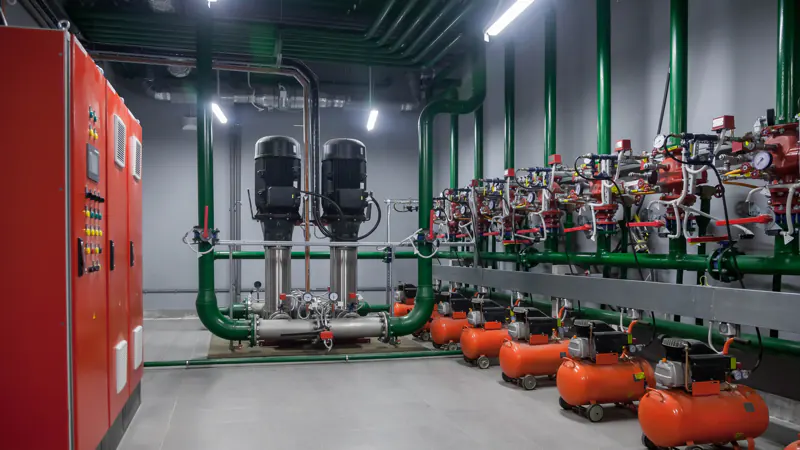
In a building that depends on a fire pump, that pump has to start and deliver its rated flow the moment it's needed, often after sitting idle between test runs. LA New York Pump repairs and maintains electric and diesel fire pumps, jockey pumps and related equipment in residential high-rises, condo and co-op buildings and commercial properties across New York City, Long Island and Westchester.
For property managers and owners, a fire pump problem is more than a repair: it can mean an impairment, a fire watch and a deficiency to clear before the next inspection. We focus on the pump equipment itself, working alongside building staff, fire protection contractors and testing personnel so problems found during inspections and tests get corrected.
What a Fire Pump System Does
A fire pump boosts water pressure for sprinkler and standpipe systems when the municipal supply alone can't deliver the pressure and flow they were designed for. That's common in high-rise buildings across the boroughs, where water has to reach upper-floor hose connections, and in large warehouses and commercial buildings on Long Island and in Westchester.
A typical installation includes:
- The fire pump: commonly a horizontal split-case, end-suction, vertical inline or vertical turbine pump
- The driver: an electric motor, or a diesel engine with its own batteries, fuel tank, cooling system and engine heater
- The fire pump controller: a specialized, listed controller that starts the pump automatically on a drop in pressure and reports its status; electric fire pumps may also have a transfer switch to an alternate power source
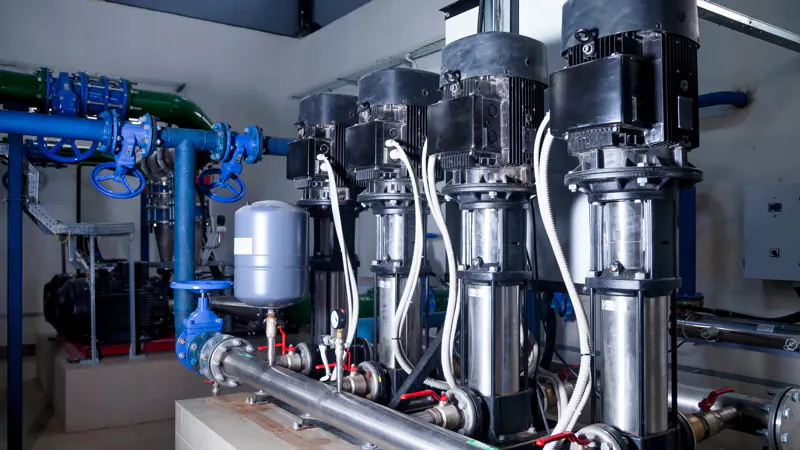
- A jockey pump: a small pressure maintenance pump that makes up for minor leakage so the main pump doesn't start unnecessarily
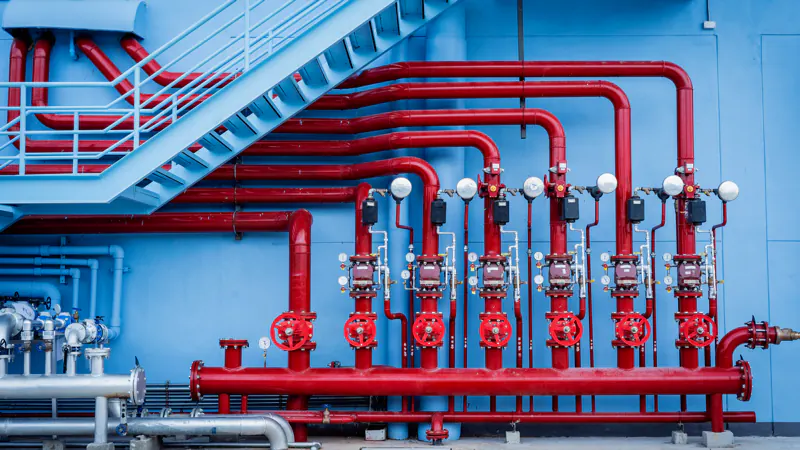
- Valves, gauges and test equipment: including the test header or flow meter used for flow tests
Standards and Testing Requirements, in General Terms
NFPA 20 covers the installation of stationary fire pumps. Ongoing inspection, testing and maintenance fall under NFPA 25, which calls for regular no-flow (churn) tests, run weekly or monthly depending on the driver type, the building and the edition of the standard that applies, along with an annual flow test that checks the pump's performance at no flow, rated flow and 150% of rated flow against its acceptance test and the manufacturer's curve.
In New York City, the Fire Code and FDNY rules add their own requirements, including qualifications for the people who perform certain inspections and tests and records that must be kept on site. On Long Island and in Westchester, requirements come from state and local codes and the local authority having jurisdiction. Details vary by building and code edition, so confirm specifics with FDNY or your local fire marshal, your fire protection engineer and your insurer. Our article on fire pump inspection and testing in NYC explains the basics for building owners.
Warning Signs a Fire Pump Needs Attention
- The jockey pump short cycles or runs much more often than it used to
- The main fire pump starts on its own with no fire or test underway
- Controller alarms such as power failure, phase reversal or failure to start
- Diesel engine alarms, weak batteries, a cold engine heater or low fuel
- Packing glands smoking, running bone dry or leaking far more than normal
- Unusual noise, vibration or heat during churn tests
- Flow test results that fall below the acceptance curve or prior results
Common Problems and What Causes Them
Jockey pump cycling and false starts
The jockey pump is set to start and stop at pressures above the main fire pump's start point. If the system has a leak, the jockey pump's check valve is leaking, or the setpoints have drifted or were never properly coordinated, the jockey pump cycles constantly or the main pump starts when it shouldn't. Every unnecessary start puts wear on the fire pump and its driver.
Packing and seal issues
Many fire pumps use packing rather than mechanical seals. Packing is designed to drip slightly while the pump runs, which cools and lubricates it. Overtightened packing runs dry, overheats and scores the shaft sleeves; worn-out packing leaks excessively.
Bearings, couplings and alignment
Fire pumps run far less than most pumps, but bearings, couplings and alignment still deteriorate, especially on split-case pumps where pipe strain or a settling base plate pulls the pump out of line.
Diesel driver problems
Diesel engines most often fail to start because of weak batteries, fuel problems, or cooling and engine heater issues, so all three deserve regular attention.
Declining performance
Worn impellers and wear rings, partially closed valves, obstructions and suction supply problems all reduce flow and pressure, and they usually show up first as a failed or marginal flow test.
Our Fire Pump Services
- Repair of fire pumps, jockey pumps and their motors, including packing, shaft sleeves, bearings, couplings, wear rings and impellers
- Shaft alignment and vibration checks on horizontal and vertical pumps
- Jockey pump replacement and coordination of its pressure settings with the main pump
- Troubleshooting of electric drivers and diesel engine starting systems
- Support during churn and annual flow tests, and correction of the deficiencies those tests reveal
Fire pump controllers are listed for fire pump service, so repairs must use parts and procedures consistent with that listing and the manufacturer's instructions. Controls for other building pumps are covered on our pump control services page, and motor testing on our pump motor services page.
Important: Taking a fire pump out of service is an impairment of the building's fire protection. NFPA 25 and local rules call for impairment procedures, which can include notifying the fire department, your alarm monitoring company and your insurer, and in some cases posting a fire watch. We plan fire pump work with building management to keep downtime as short as possible.
Fire Pump Equipment We Work On
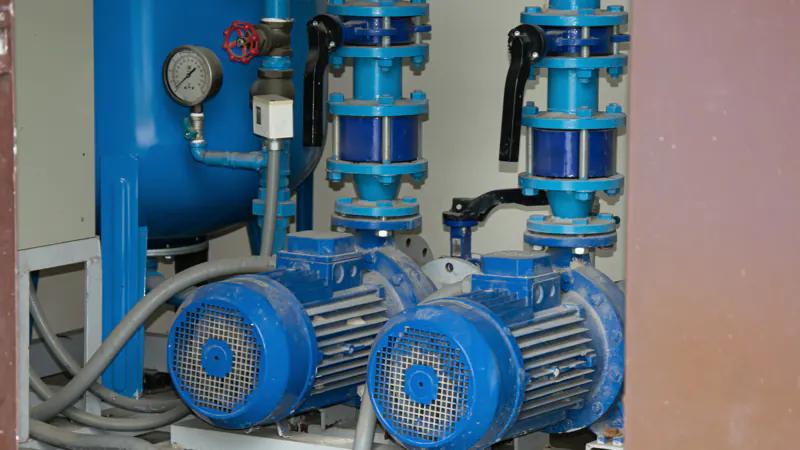
We work on horizontal split-case, end-suction, vertical inline and vertical turbine fire pumps, their electric motors and diesel engine drivers, and the jockey pumps, often multistage designs, that maintain system pressure between starts.
For Property Managers and Supers
- Share recent churn and flow test records and any deficiency notices; they help us focus on the right problem
- We plan fire pump work with you so the system is out of service as briefly as possible and you can handle impairment notifications ahead of time
- A jockey pump that cycles constantly or a main pump that starts on its own should be checked before it turns into an emergency
- We explain what the repair involves and the options, so you can report to the owner, the board and your fire protection engineer
Learn more about how we support property managers and building owners, or see emergency pump repair for after-hours fire pump alarms.
How We Work: Inspect, Discover, Fix
We inspect the pump, driver, jockey pump, controller indications and recent test records. We discover what's behind the alarm, false start or test deficiency and explain what needs to be done. Then we fix it and run the pump to confirm the repair holds, so the building is ready for its next test and for a real fire.
We serve high-rise and commercial buildings throughout Manhattan and Brooklyn, as well as Long Island and Westchester. Fire pumps often share a pump room with the building's domestic water booster pumps, which we service as well.
Fire pump alarm, a jockey pump that won't stop cycling or a deficiency from your last test? Call LA New York Pump at (631) 565-9577. We're available 24/7 for emergencies across New York City, Long Island and Westchester.